European distribution of electronic components grew 30.2% in the first nine months of 2026, to €15.0 billion. That is the latest count from DMASS, the association of European component distributors. The third quarter alone grew 42.7%. For a distributor this means more requests from EMS and OEM customers, with the same team to answer them.
How big is the growth?
Almost a third more than last year. From January to September, European distributors sold components worth €15.0 billion, 30.2% more than a year before. In the third quarter alone they sold €5.4 billion, 42.7% more than in the same quarter of 2025.
Source: DMASS, Q3 2026
DMASS members cover about 88% of the European distribution market, so these figures describe almost the whole market. DMASS calls Q3 the strongest quarter since the recovery began.
What is driving it?
Semiconductors first, then everything else. Semiconductor distribution grew 36.9% to €9.5 billion. Interconnect, passive and electromechanical parts (IP&E) grew 20.3% to €5.6 billion.
Source: DMASS, Q3 2026
Part of the semiconductor growth is price. Memory sales rose 189.4%, and DMASS points to pricing effects there. Without memory the picture is calmer, but still strong. Discretes grew 30.8%, analog 24.9%, power 11.5%.
IP&E is the better sign of real demand, because prices move less there. Passives grew 22.8%, power supplies 19.8% and electromechanical parts 18.9%. DMASS names automation, electrification, energy infrastructure and data centers as the drivers.
Where in Europe is it growing?
Almost everywhere, but not at the same speed. Israel grew fastest at 50.7%. Ireland grew 35.9%, the Nordics 35.4% and Germany, the largest market, 33.0%.
Source: DMASS, Q3 2026
The south grew more slowly. France grew 26.0%, Italy 21.0% and Iberia 19.6%. Those are still healthy numbers. If your customers sit in Germany or the Nordics, you probably feel the upturn more than a distributor in Spain does.
What does a boom mean for your sales team?
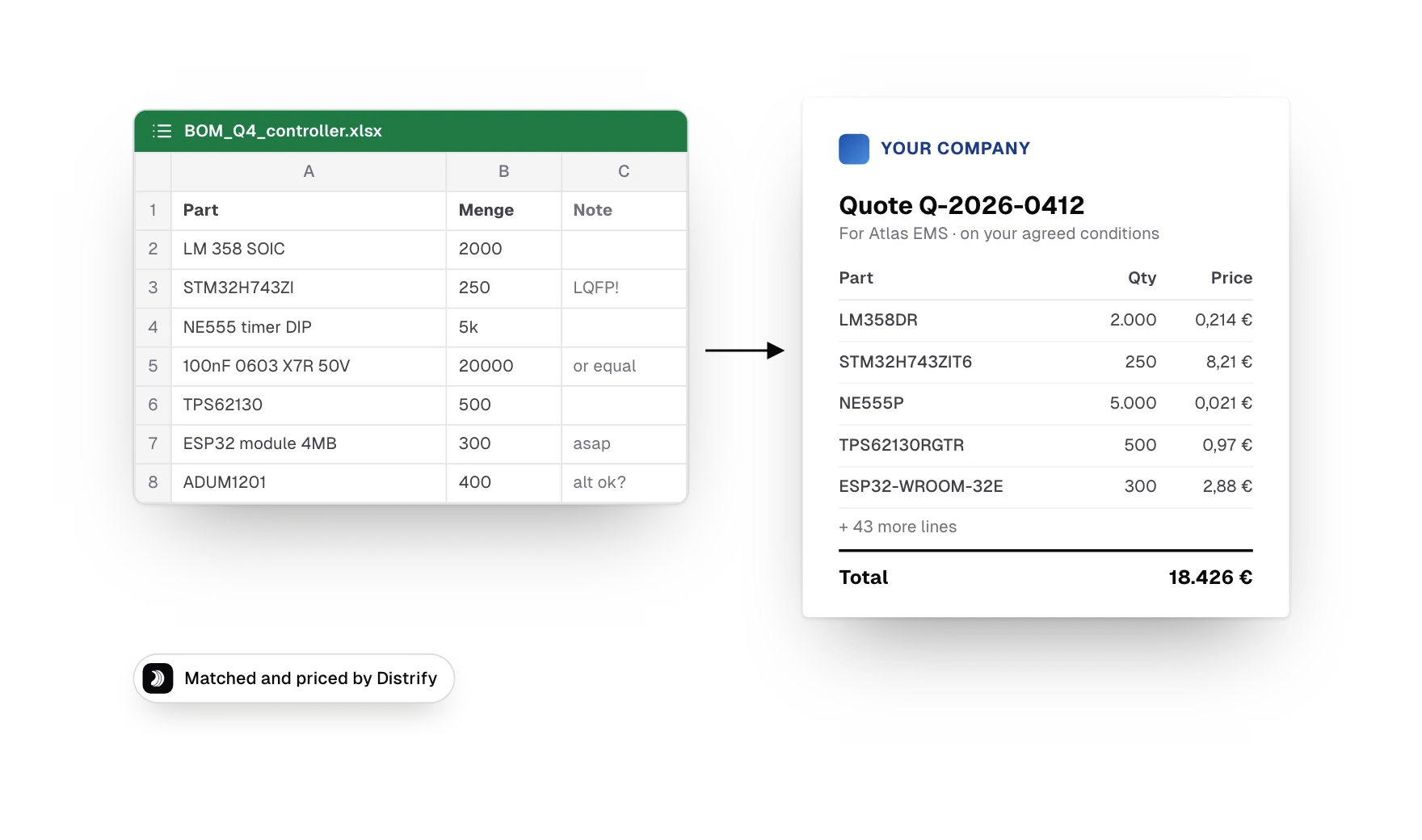
More work, mostly the routine kind. When demand grows by a third, so do the RFQs, the BOM checks and the questions about stock and lead times. Your team does not grow by a third.
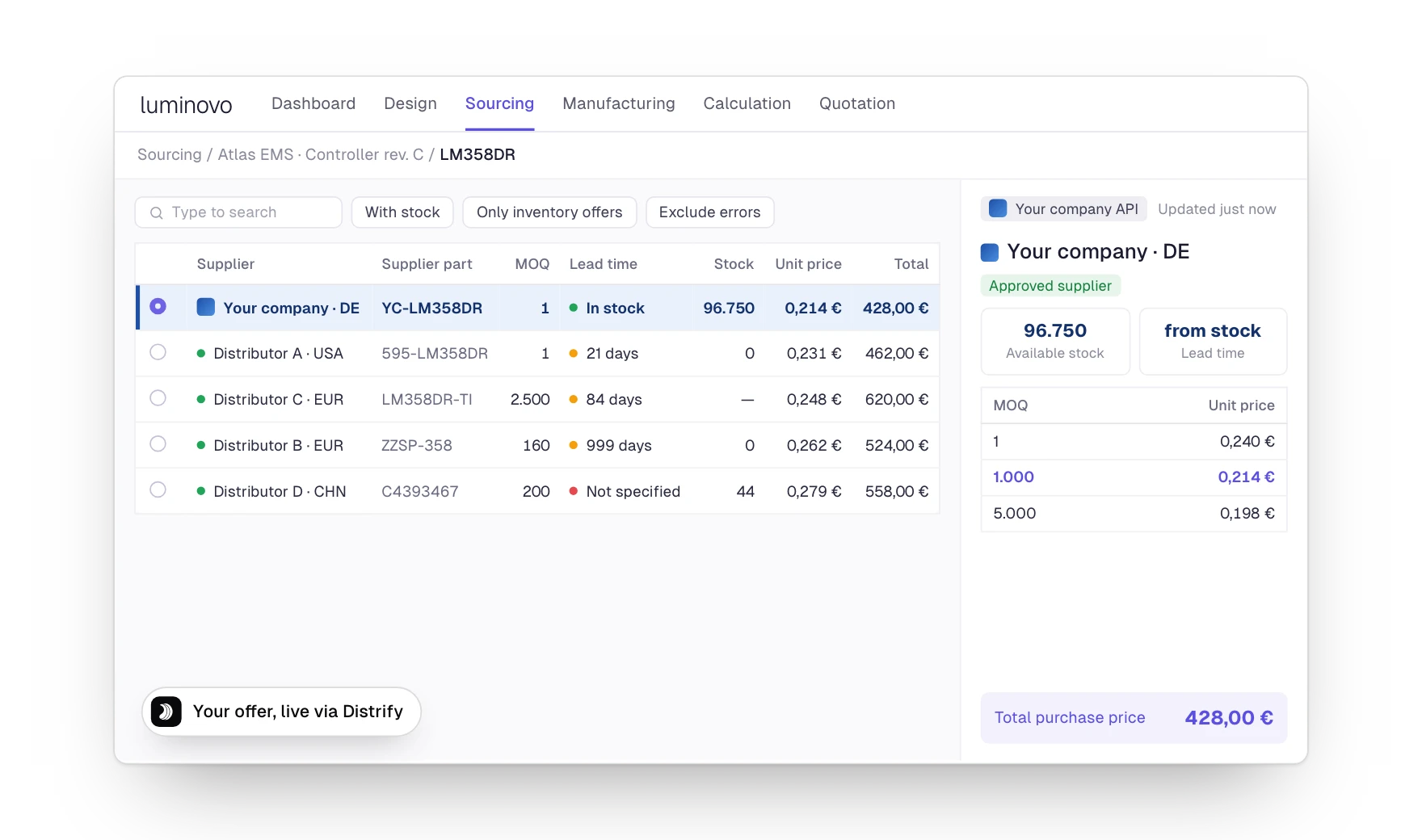
Buyers also compare faster in a busy market. They send the same BOM to several distributors and use tools like Luminovo or Octopart to check who has stock. More and more let AI procurement agents do that comparing for them. The first complete answer often gets the order. A good price that arrives two days later does not.
So the bottleneck moves. It is no longer finding demand. It is answering the demand you already have, quickly and correctly.
Will the upturn last?
DMASS thinks the market is moving from a quick rebound to steadier growth. The broad growth in IP&E and across regions supports that view. But DMASS also warns about geopolitics, trade and energy prices.
Memory is the part to watch. Growth driven by prices can turn when prices fall. Plan for a strong 2027, but do not hire as if 30% growth were the new normal.
What should you do now?
Measure how fast you answer today. It takes a week:
- Count the RFQs and BOMs your team gets each day.
- Note how long the first answer takes, from request to quote.
- Ask your five biggest customers which tools they use to compare offers.
If answers take more than a day, more demand will mean more lost orders. Fix the routine work first: quoting standard parts and keeping stock and prices current in the tools your customers use, such as oemsecrets.
At Distrify we help distributors with exactly that routine: quote automation for incoming RFQs and the RFQ connector for the tools buyers compare in.